
BMS | Field Training
One Clear View of Every Recruit’s Field Training
The Field Training module runs your whole program in one view, DORs in minutes, every recruit’s progress at a glance
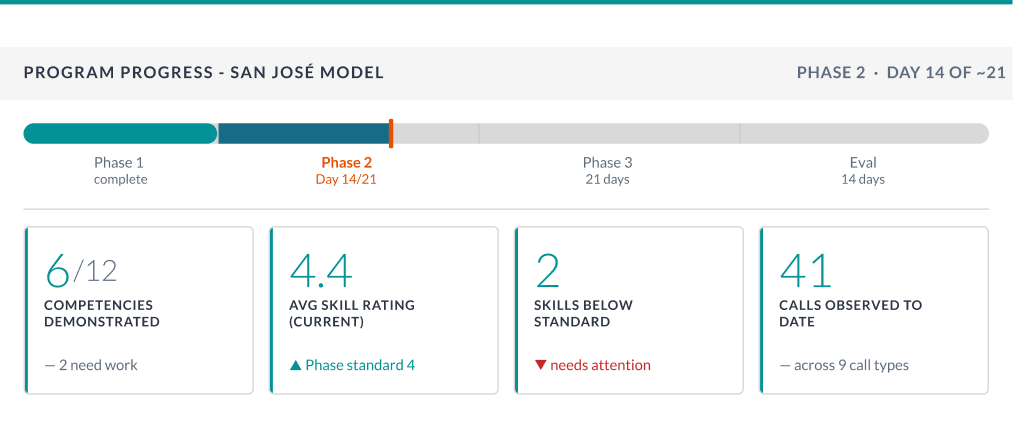
Program dashboard, phase and day on the San José model, competencies demonstrated, current skill rating against the phase standard, skills below standard, and calls observed to date.
Why it Matters
Field training decides which recruits reach solo patrol, yet most agencies still run it on paper or a tool never built for it. The hard part isn’t the stack of DORs, it’s that no one can see, in one place, what each recruit has done and still needs, so training gets steered by guesswork.
The Field Training module within the Benchmark Management System® sets up in hours and runs your entire field training and evaluation program (FTEP) in one place: DORs finished in minutes, evaluations that stay complete and consistent, and a real-time view of where every recruit stands and what to train next.
What it Does
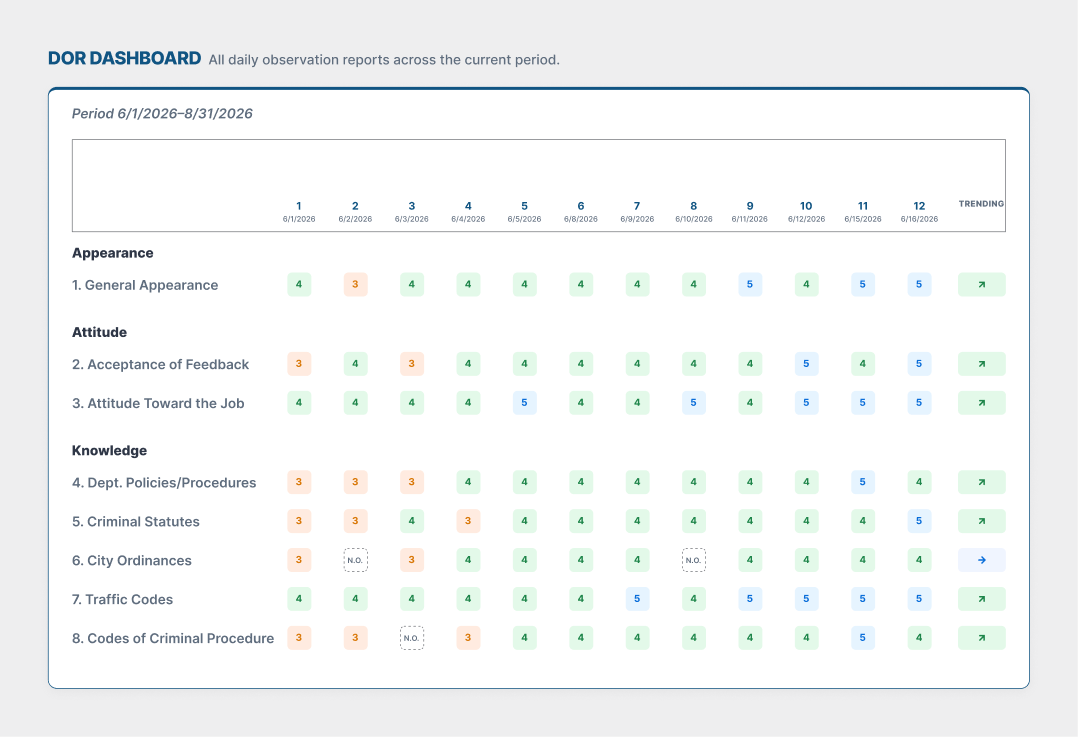
From the Daily Observation Report to the whole-program view, our Field Training module brings your entire program into one connected system. Finish DORs in minutes, see where every recruit stands, configure the program to how you train, and keep every record complete.
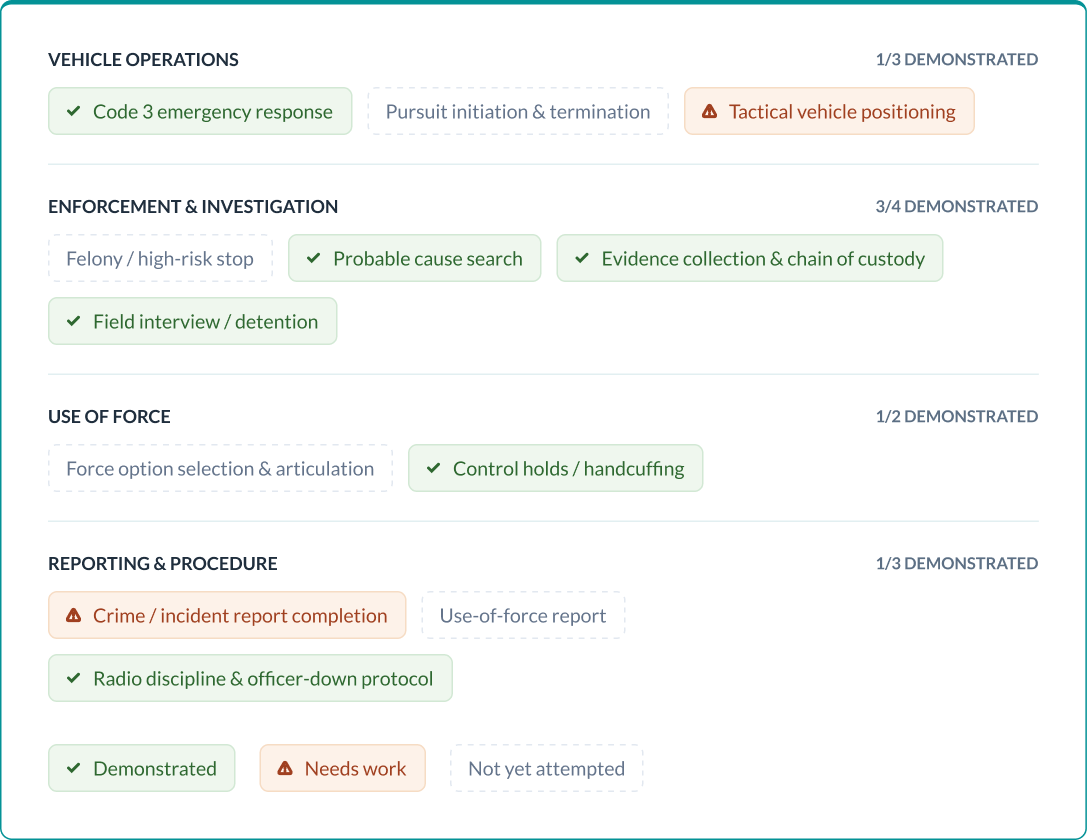
Competency map, every program competency grouped by domain, each tile marked demonstrated, needs work, or not yet attempted.
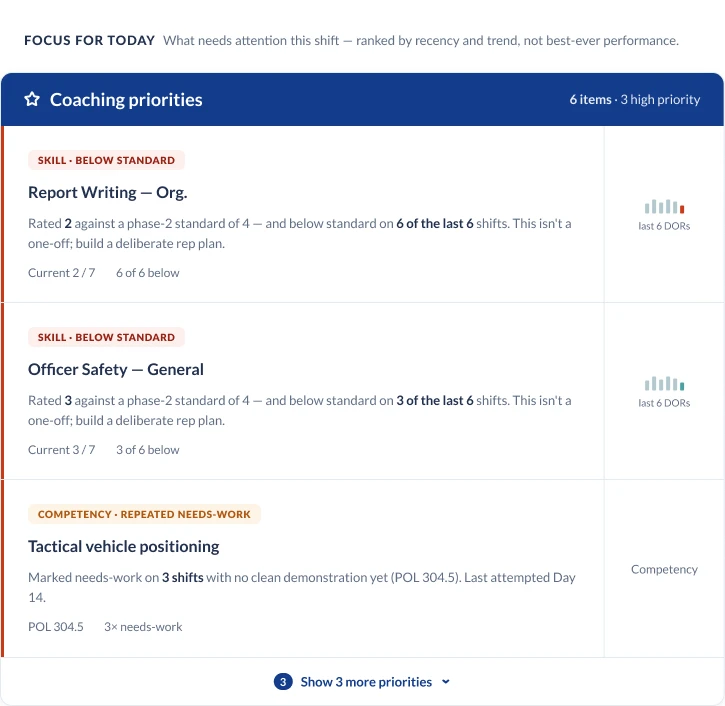
Coaching priorities, what needs attention this shift, ranked by recency and trend rather than best-ever performance.
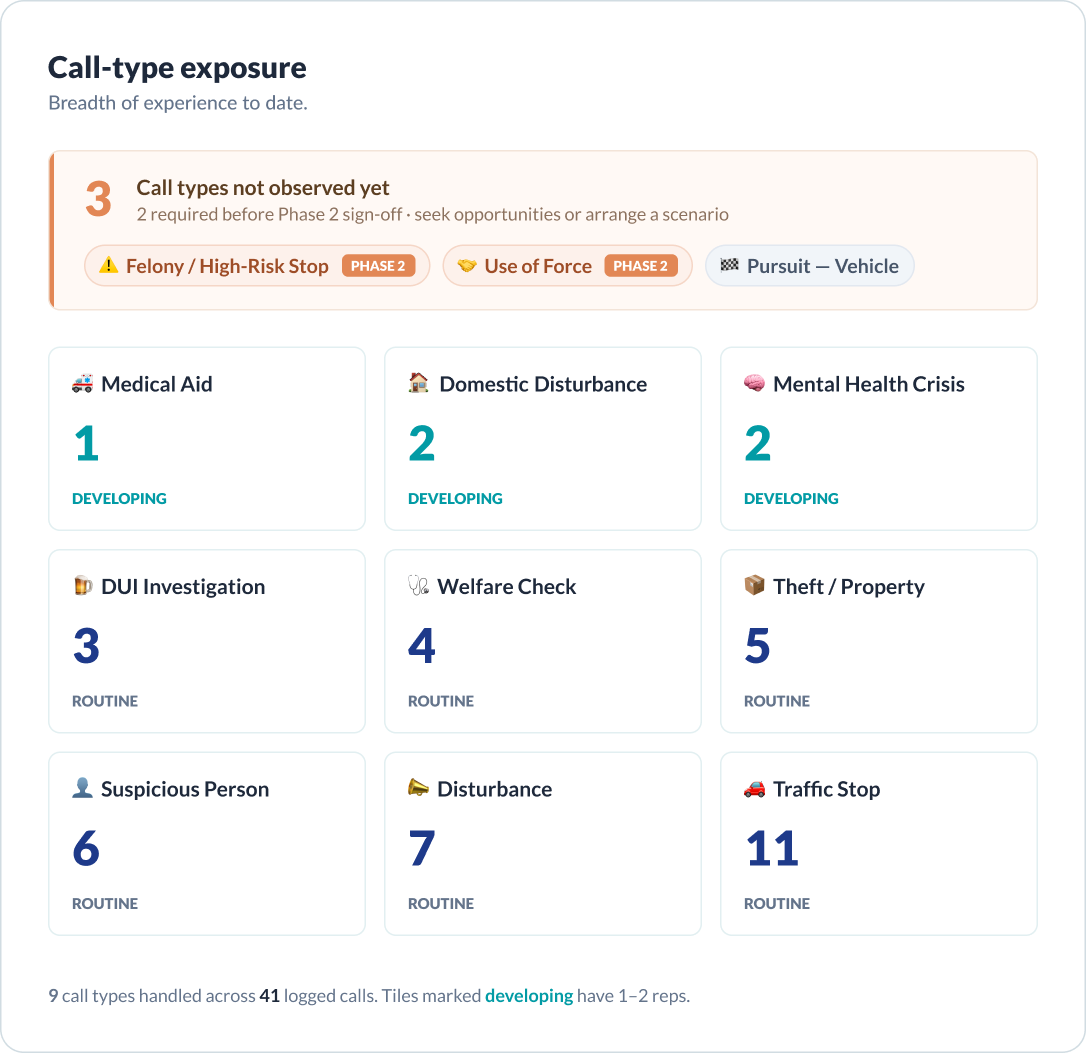
Call-type exposure, breadth of experience to date, with the call types not yet observed surfaced against phase requirements so the FTO can steer the next shift.
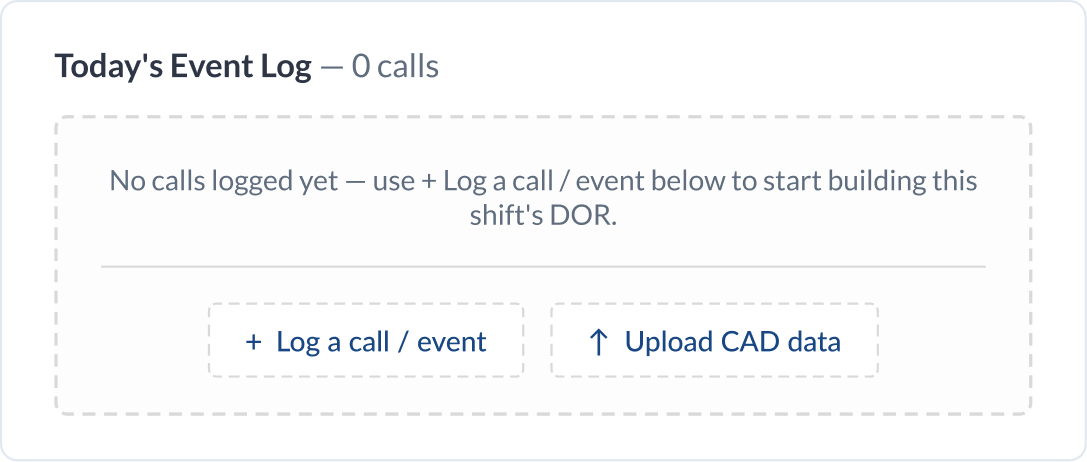
DOR capture, log each call or event as the shift unfolds, or upload CAD data to pre-populate the report, instead of reconstructing the report from memory afterward.
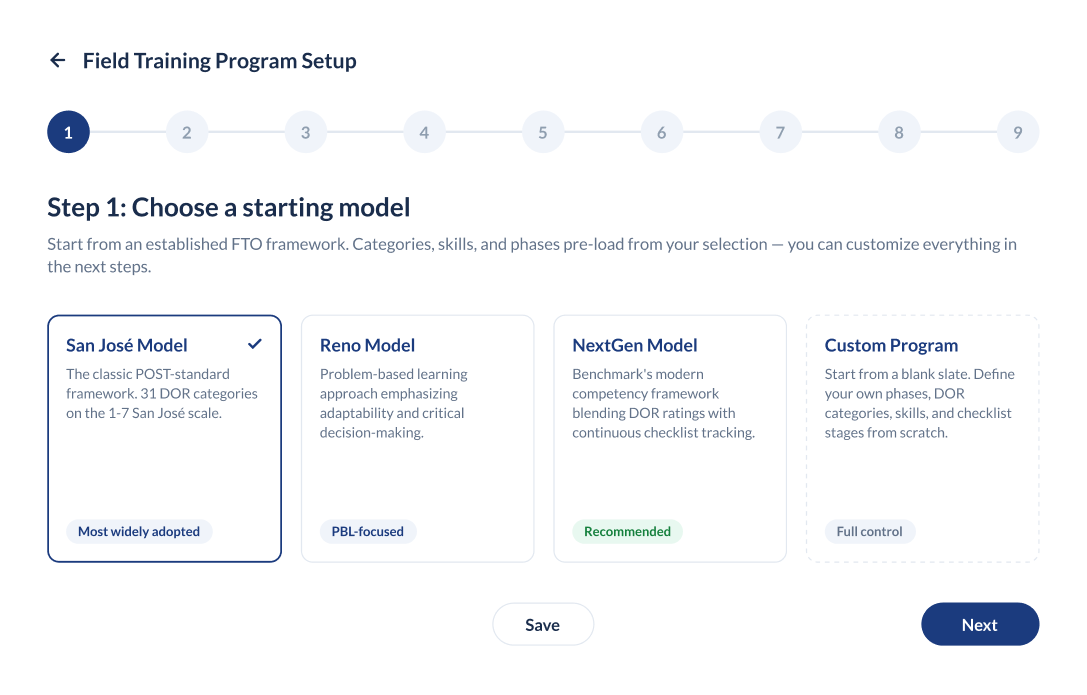
Program setup, start from an established FTO framework (San José, Reno, or Benchmark’s NextGen model) or a blank slate, then customize categories, skills, and phases yourself across the guided steps.
Program setup, start from an established FTO framework (San José, Reno, or Benchmark’s NextGen model) or a blank slate, then customize categories, skills, and phases yourself across the guided steps.
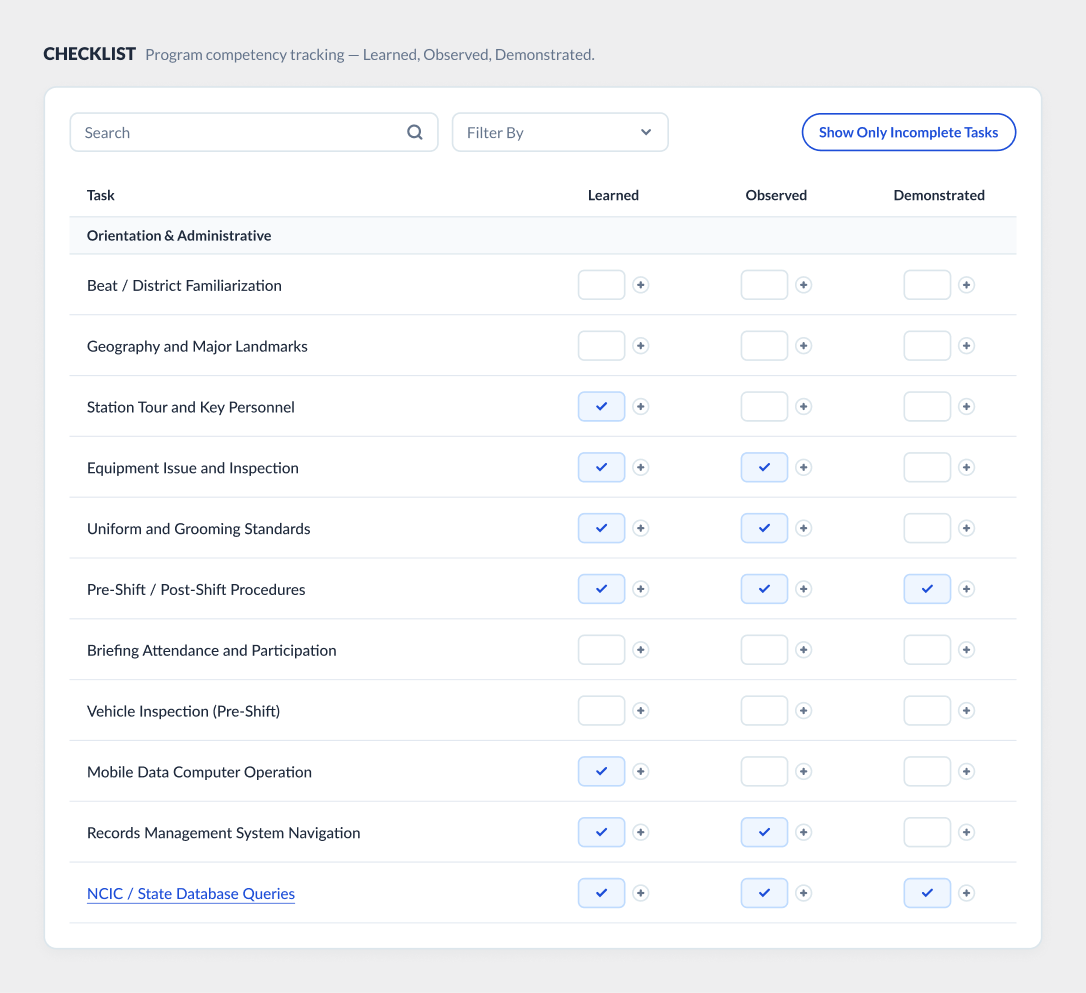
Training task checklist, every program competency tracked as Learned, Observed, and Demonstrated, so nothing is signed off before it is complete.
On the Road to Outcomes: See It in Action
Take a short, guided look at how it works. When you’re ready for the full picture, we’ll tailor a walkthrough to your agency.
From Field Training Paperwork to Better-Prepared Officers
A field training program you can see is a program you can improve. Because every DOR is complete and every trainee’s progress is visible in one place, you move from reconstructing shifts after the fact to steering training in real time: FTOs spend their shift training instead of doing paperwork, coordinators know what each recruit still needs, and supervisors advance officers on the full record rather than a hunch.
This is the Outcomes Standard™ at work in field training, not just a digital DOR, but a program that puts better-prepared officers on the street.
Frequently Asked Questions
What to know on the way to measurable outcomes.
More Ways Benchmark Builds the Officer Record
Field training is where an officer’s record starts. From there, the Benchmark Management System® holds it as the single source of truth, and First Sign® reads it to identify who needs support and who deserves recognition.

BMS | Benchmark Management System®
For one accurate, analysis-ready source of personnel data.
First Sign®
For identifying who needs support and who deserves recognition.
Request a Demo
See What the Outcomes StandardTM Looks Like for Your Agency
Request a one-on-one demo and we’ll show you how Benchmark turns your personnel data into measurable performance outcomes, built for the way your agency works.